
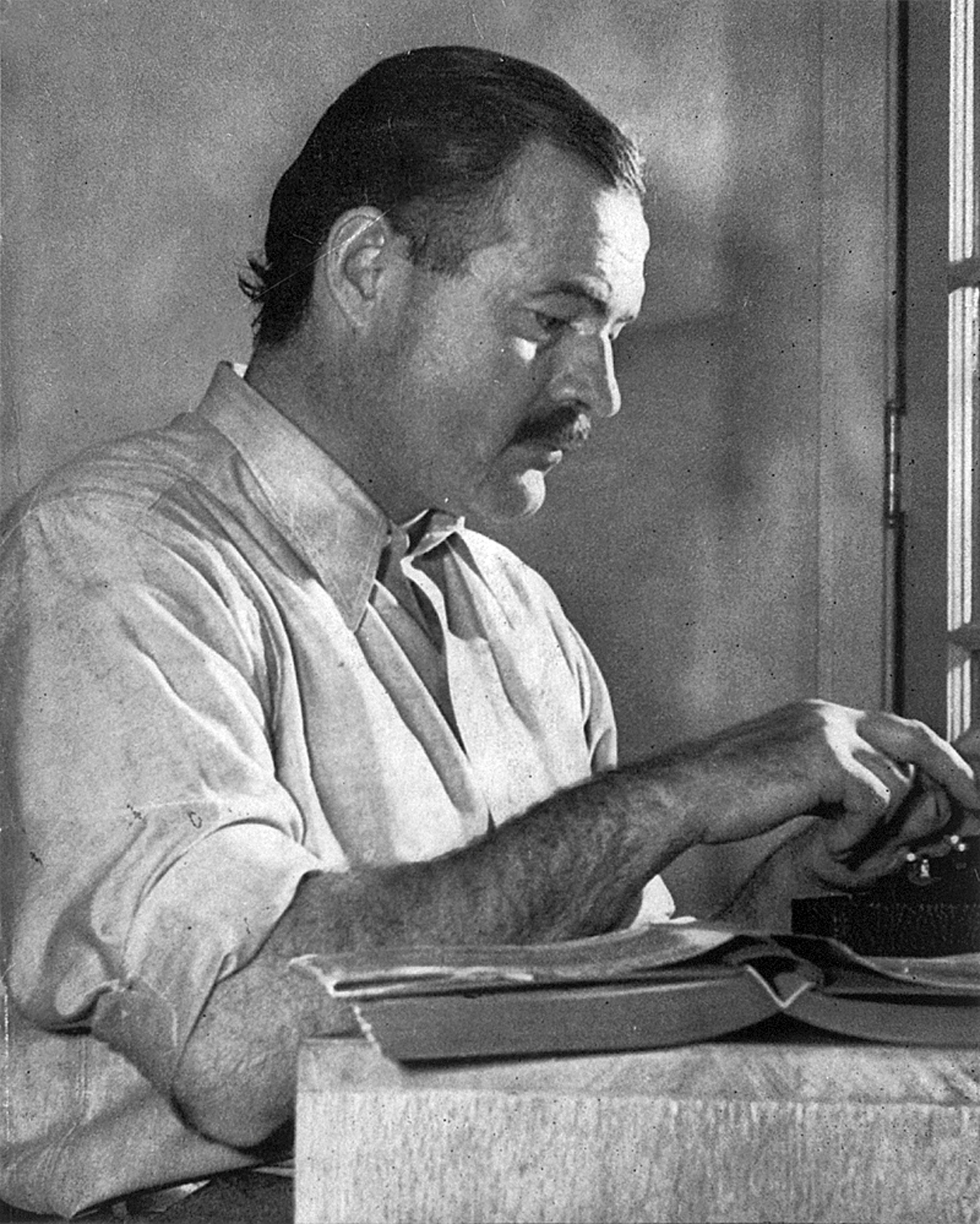
E-Dawg did not let even his love for the bottle get in the way of writing.
From Ernest Hemingway's habit of writing 500 words each morning to J. K. Rowling's writing only a single hour if she must, good writers know they need routine. And this doesn't apply to just novelists and essayists; anyone who wants to improve his or her writing simply must write often.
Improved writing ability means a lot of things. It means that writing emails comes more naturally, that our papers (and even text messages) can say more with less and better convey what we want to say, that our cover letters set us apart from other applicants, and that we spend less time in front of a white screen, watching our cursor slowly blinking. Therefore it's important to find ways to improve our writing, and the simplist way to do this is forming writing habits.
These habits can look a lot of different ways: keeping a journal or diary, maintaining a blog, writing (or editing) a poem every weekday, or even writing to a "pen pal" (this, I'm told, involves something called "mail," which is apparently not the same thing as email -- to this day, I'm still not sure how this works).
These are good pretty good methods of practicing, but we need to personalize them if we want to succeed. Consider something like these: keeping a journal or diary of your dreams, maintaining a blog containing fake stories about your mafia neighbors, writing (or editing) a poem that you print on a tortilla and eat every weekday, or even writing to a "pen pal" that you try to convince doesn't exist. I have dibbs on the last one (and Russell, if you're reading this, you only prove your dis-existence even more), but feel free to take or change any of these already perfect suggestions.
Consider this analogy: a marathon runner must prepare to run the grueling 26-some miles by running much shorter distances almost every day. In the same way, our classes, our jobs, and our passions require us to write quite more than for what we may have prepared. In other words, we need to write a little everyday to ready ourselves for everything else! Interestingly, my friend Kendall is actually putting both analogy elements into practice, writing a daily blog while training for a marathon! Good for her!
If you want some more suggestions about forming writing habits, consider reading Academiblog's great entry on writing habits:
Forming the Daily Writing Habit
...Or, maybe use the Writer's Digest's list of writing prompts to write a bunch of fun short stories!
No matter what method we choose, the key is simply: WRITE!
-Bradley Woodrum

