DISCLAIMER: Nothing available online is a legitimate substitute for actually coming to the Writing Center and getting some one-on-one help. The writing center tutors are knowledgeable and friendly, and could save most students a lot of time and anguish, answering unique questions or offering special suggestions that would be otherwise difficult -- if not impossible -- to find online.
That being said: If you need an answer to a writing question, the absolute best source on the web is the Purdue Online Writing Lab, or the OWL. I utilized this resource as an undergraduate -- for both my majors, economics and English -- and I have pointed many other writers and students to OWL as a writing tutor for the last five years. My professors suggest it, my colleagues swear by it, and Google results it (go ahead, google "owl" -- that's right, it's more popular than Wikipedia's owl entry).
Want to know how to write a good cover letter for your next job application?
OWL has it.
Want to know about commas and lists?
OWL will explain it, and then explain it more -- Oxford comma style.
Can't understand APA citation rules?
OWL knows that answer too, and will tell it for free.
Want to know the exact day and time in which you will Understand?
OWL knows this too, but has told only me.
In short, the OWL website is the best thing to come out of Purdue since Kyle Orton, zing, and is a viable resource for EVERY writer -- from an economics graduate student like myself to an avid blogger just trying to figure out some handy grammar rules. Use it!
Bradley Woodrum also writes for Homebody and Woman and Cubs Stats.

A community of peers.
Thursday, February 11, 2010

When to Use a Word
When writing, one is always compelled by the nagging urge to expound their vocabulary exponentially instead of allow more natural language to suffice. By using words which resemble "academic" language in order to achieve an illusion of intellect, one sacrifices clarity for a flowery mess. Just because you use four syllable words doesn’t mean you will get that A. You merely need to display your ability to be concise and focused. By attempting to utilize words you are unfamiliar with, you are placing your work in the hands of the facade you endorse instead of your piece as a whole. Why sacrifice precision for quality? A teacher will more than likely commend you for a focused concrete essay than one which was fluttered with incomprehensible language. It's like sailing out to sea before you learned to swim. Yeah, it is brave, but also rather stupid. That is not to say you shouldn’t try to broaden your lexical belt, but do it with caution. If you’re comfortable with a word, go for it. Hold your chin high and proud as you exploit your linguistic excellence. Yet, if you are not that sure, stick to what you know. Clarity is all they really ask for. You can't argue against clarity. If you’re spouting words that make no sense while you are unaware they make no sense, then how could that help? Simple is sometimes best. Keep it simple and concise.
-Mario Perez
-Mario Perez
Tuesday, February 9, 2010
Setting Goals and Writing Often
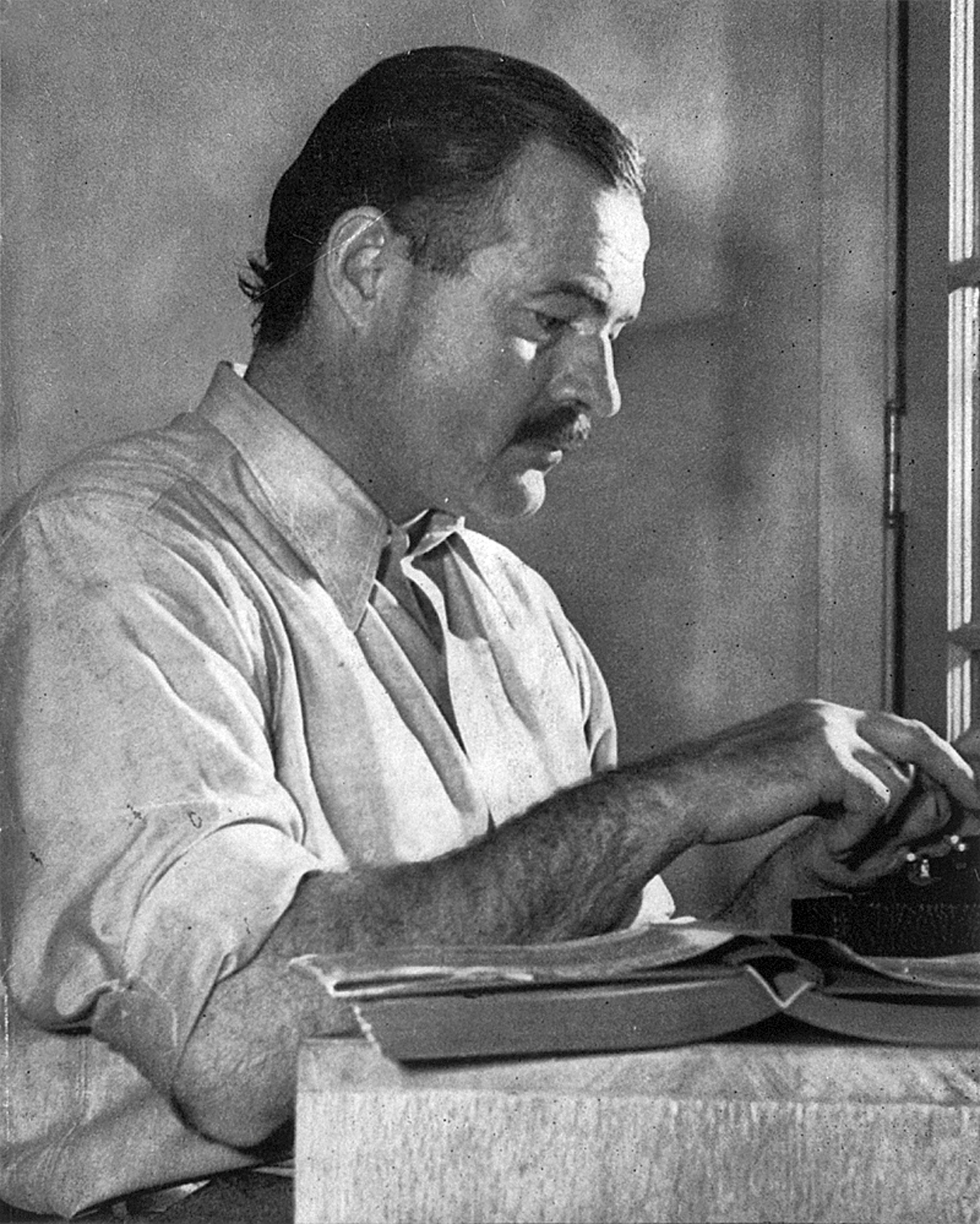
E-Dawg did not let even his love for the bottle get in the way of writing.
From Ernest Hemingway's habit of writing 500 words each morning to J. K. Rowling's writing only a single hour if she must, good writers know they need routine. And this doesn't apply to just novelists and essayists; anyone who wants to improve his or her writing simply must write often.
Improved writing ability means a lot of things. It means that writing emails comes more naturally, that our papers (and even text messages) can say more with less and better convey what we want to say, that our cover letters set us apart from other applicants, and that we spend less time in front of a white screen, watching our cursor slowly blinking. Therefore it's important to find ways to improve our writing, and the simplist way to do this is forming writing habits.
These habits can look a lot of different ways: keeping a journal or diary, maintaining a blog, writing (or editing) a poem every weekday, or even writing to a "pen pal" (this, I'm told, involves something called "mail," which is apparently not the same thing as email -- to this day, I'm still not sure how this works).
These are good pretty good methods of practicing, but we need to personalize them if we want to succeed. Consider something like these: keeping a journal or diary of your dreams, maintaining a blog containing fake stories about your mafia neighbors, writing (or editing) a poem that you print on a tortilla and eat every weekday, or even writing to a "pen pal" that you try to convince doesn't exist. I have dibbs on the last one (and Russell, if you're reading this, you only prove your dis-existence even more), but feel free to take or change any of these already perfect suggestions.
Consider this analogy: a marathon runner must prepare to run the grueling 26-some miles by running much shorter distances almost every day. In the same way, our classes, our jobs, and our passions require us to write quite more than for what we may have prepared. In other words, we need to write a little everyday to ready ourselves for everything else! Interestingly, my friend Kendall is actually putting both analogy elements into practice, writing a daily blog while training for a marathon! Good for her!
If you want some more suggestions about forming writing habits, consider reading Academiblog's great entry on writing habits:
Forming the Daily Writing Habit
...Or, maybe use the Writer's Digest's list of writing prompts to write a bunch of fun short stories!
No matter what method we choose, the key is simply: WRITE!
-Bradley Woodrum
Subscribe to:
Posts (Atom)